
Newsletters
Same Tool, Different Impact: The Two Faces of Digital Management in Remote Teams
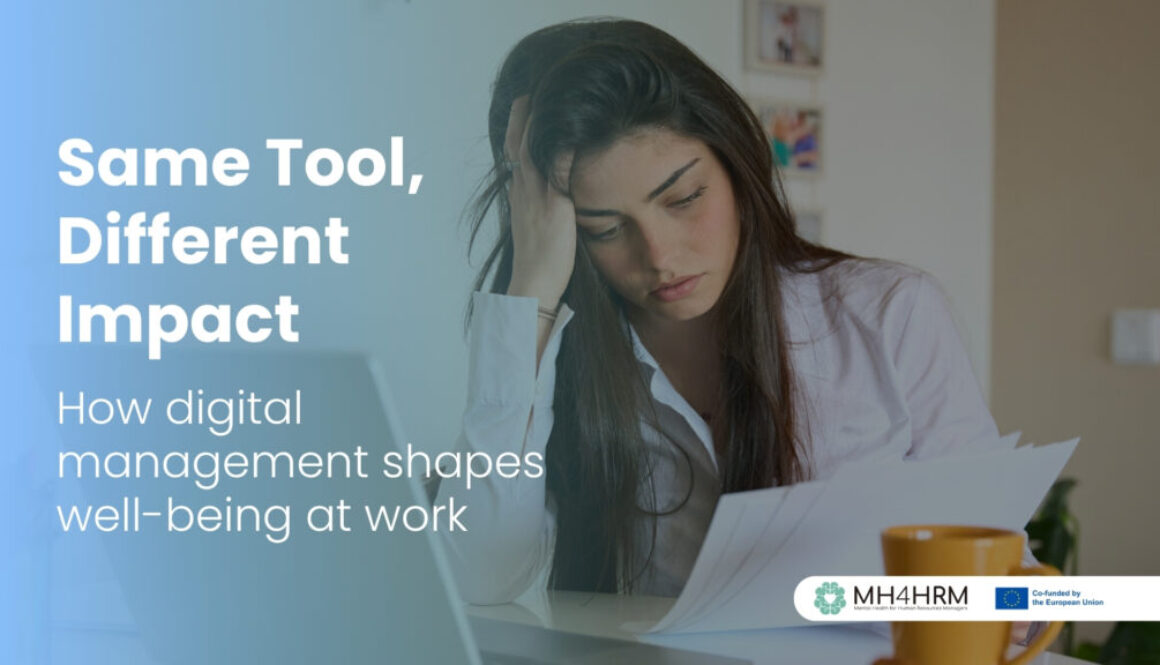
Digital tools are neither good nor bad. But the way managers use them can make or break a remote team’s well-being.
The shift to remote and hybrid work has put digital communication at the centre of daily management. Emails, messages, video calls — they’re the new office corridors, the new open doors. And just like in a physical office, what a manager does in these spaces matters enormously. The difference is that in digital environments, the line between being supportive and being intrusive has become dangerously thin.
The bright side: presence that empowers
When managers communicate clearly through digital channels, provide prompt feedback, choose the right tool for the right situation, and remain available for genuine emergencies, something powerful happens. A study conducted at the University of Bologna and led by Dr. Cioffi showed that employees who experience this kind of supportive digital leadership report greater clarity in their roles and a stronger sense of being backed by their supervisor (Cioffi, Balducci & Toderi, 2025). It’s the digital equivalent of a manager whose door is always open: approachable, responsive, and organised. This echoes broader evidence that effective digital communication and a feedback-rich culture are among the strongest predictors of remote workers’ well-being (Wang et al., 2021; Poulsen & Ipsen, 2017).
The dark side: connection that controls
Now flip the coin. The same tools that enable support can also become instruments of pressure. Late-night emails with work requests. Unexpected calls during sick leave or holidays. Constant “are you there?” check-ins that signal distrust rather than care. A recent systematic review confirmed that these over-monitoring and boundary-violating behaviours are directly linked to increased stress due to technology in employees (Rademaker et al., 2023). Also called “technostress”, it is a condition of physical and mental distress, recognized as an occupational disease since 2007, caused by excessive or improper use of digital technologies (ICT). Consistently, when managers avoided these abusive digital practices, their teams reported more autonomy and lower workload pressure (Cioffi et al., 2025). In other words, sometimes the most effective thing a manager can do digitally is… nothing.
What HR can do about it
The good news is that these aren’t personality traits — they’re competencies, and competencies can be developed. A recent study (Cioffi et al., 2025) produced a validated 9-item tool (the DMCIT) that organisations can use as a self-reflection exercise for managers or as upward feedback from teams. A quick, evidence-based way to spot blind spots and turn digital habits into healthier ones.
Because in the end, the question isn’t whether your organisation uses digital tools. It’s whether your managers use them to lift people up — or wear them down.
References
Cioffi, G., Balducci, C., & Toderi, S. (2025). Digital Stress-Preventive Management Competencies: Definition, Identification and Tool Development for Research and Practice. International Journal of Environmental Research and Public Health, 22(2), 267. https://doi.org/10.3390/ijerph22020267
Poulsen, S., & Ipsen, C. (2017). In times of change: How distance managers can ensure employees’ wellbeing and organizational performance. Safety Science, 100, 37–45.
Rademaker, T., Klingenberg, I., & Süß, S. (2023). Leadership and technostress: A systematic literature review. Management Review Quarterly.Wang, B., Liu, Y., Qian, J., & Parker, S. K. (2021). Achieving effective remote working during the COVID-19 pandemic: A work design perspective. Applied Psychology, 70(1), 16–59.
WHY TECHNICAL SKILLS MAY NOT BE ENOUGH TO PROMOTE MENTAL HEALTH IN THE WORKPLACE
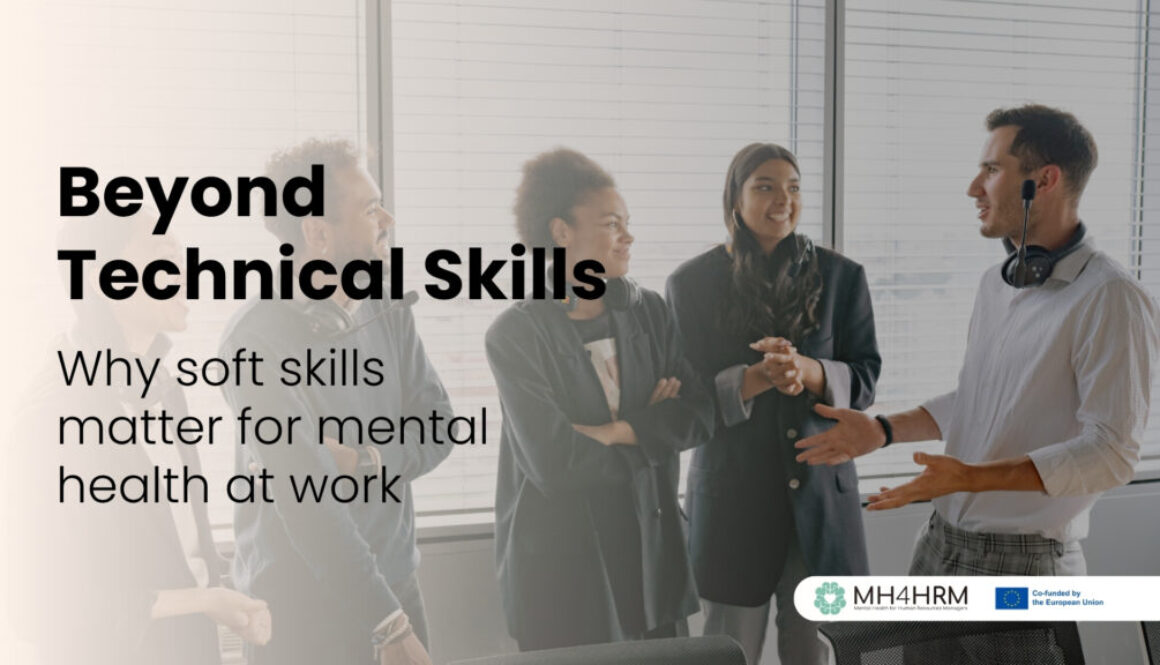
Modern organizations increasingly recognize workers’ mental health as an important factor in productivity and quality of work, with HR professionals playing a crucial role in implementing policies, procedures, and tools aimed at maintaining and improving their mental health. However, research suggests that technical skills alone, although necessary, may not be sufficient to effectively address mental health issues that workers may experience.
Technical skills include knowledge and understanding of the legislative framework, psychosocial risks, and methods of their assessment, as well as monitoring indicators such as sick leave, turnover, and work performance. Such skills enable a structured approach to mental health management, but they alone may not guarantee a safe and supportive work environment. Studies suggest that organizational factors and interpersonal relationships have as strong an impact on workers’ mental health as formal policies and procedures.
Workplace mental health is largely shaped by everyday interactions. HR professionals are often the first contact point for workers dealing with stress and mental health challenges, where soft skills such as communication, empathy, active listening, and emotional intelligence play a crucial role. Research shows that workers seek support more often and report difficulties earlier in surroundings where they feel safe and heard. Furthermore, HR experts with developed interpersonal skills are more likely to recognise early signs of psychological stress and react in a timely manner through adjusting working conditions, mediating with management, or referring workers to appropriate forms of support. Without these skills, technical tools and procedures may remain unused or be used only when the problem has already developed significantly.
Additionally, beyond the individual level, HR’s soft skills strongly influence organisational culture. The way HR communicates and resolves conflicts shapes the level of trust and psychological security in the organisation.
Therefore, maintaining mental health in the workplace requires an integrated approach. Technical HR skills provide structure, alignment, and measurability, while soft skills enable their effective application in real-world work surroundings. The development of both sets of competencies is essential for HR professionals to be able to respond to the challenges of workers’ mental health. That’s why the MH4HRM was developed – to provide HR professionals with practical tools and educational resources to support both technical and soft skill development.
References:
- Edmondson, A. (2018). The Fearless Organization. Wiley.
- Edmondson, A. C., & Lei, Z. (2014). Psychological safety: The history, renaissance, and future of an interpersonal construct. Annual Review of Organizational Psychology and Organizational Behavior, 1, 23–43.
Why Mental Health Is Now a Strategic Priority for HR Managers
Mental health in the workplace has moved decisively from the margins to the core of organizational strategy. Across Europe and beyond, Human Resources managers are increasingly expected not only to ensure compliance and efficiency, but also to actively shape working environments that protect psychological well-being, foster inclusion, and enable sustainable performance.
This shift is strongly supported by international policy frameworks. In 2022, the World Health Organization (WHO) and the International Labour Organization (ILO) issued landmark guidelines on mental health at work, calling on organizations to move beyond individual-focused interventions and adopt structural, preventive, and rights-based approaches.
This article presents the WHO/ILO three-pillar framework for mental health at work and explains why it is particularly relevant for HR managers today. It also outlines the conceptual foundation that underpins the MH4HRM project, which aims to strengthen the capacity of HR professionals and managers to translate these guidelines into everyday organizational practice.
The WHO/ILO 3-Pillar Strategy for HR
1. The Prevention Pillar: Managing Risks
This represents the most impactful level of intervention. Instead of relying solely on individual stress-management workshops, HR must address the root causes of stress through organizational interventions.
The goal:
Mitigate psychosocial risks such as heavy workloads, low autonomy, unclear roles, and toxic behaviours (including bullying and harassment).
HR action:
Redesign jobs to offer greater flexibility and autonomy and strictly enforce anti-harassment policies.
2. The Promotion Pillar: Managerial Literacy
Managers are the critical link between high-level policy and the daily employee experience. HR must invest in training managers not just in “first aid”, but in fostering a supportive and psychologically safe culture.
The goal:
Create a distributed support system that reduces stigma and normalises conversations around mental health.
HR action:
Train managers to recognise signs of distress, listen without judgement, model healthy behaviours, and refer employees to professional support services (e.g. Employee Assistance Programmes).
3. The Support Pillar: Participation and Inclusion
This pillar ensures that workers experiencing mental health conditions can continue to participate fully in working life.
The goal:
Uphold the right to work through inclusive and adaptable organisational systems.
HR action:
Implement reasonable accommodations (such as adjusted schedules, responsibilities, or communication styles) and structured return-to-work programmes, combining graded reintegration with clinical support where appropriate.
From Guidelines to Practice
For HR managers, adopting the WHO/ILO approach to mental health at work is more than a compliance exercise—it is a signal of strategic leadership. By addressing psychosocial risks at their source, equipping managers with the skills to foster supportive cultures, and ensuring inclusive systems for employees experiencing mental health challenges, organisations lay the groundwork for both individual well-being and long-term sustainability.
The MH4HRM project builds on this framework by supporting HR professionals and managers in turning international guidelines into concrete, actionable practices within their organisations. Through training, pilot actions and shared learning, the project contributes to bridging the gap between policy and practice, helping workplaces become not only more productive, but also safer, healthier and more human-centred.
Bibliography
World Health Organization (WHO).
WHO. (2022). Guidelines on mental health at work. World Health Organization.
World Health Organization (WHO) & International Labour Organization (ILO).
WHO & ILO. (2022). Mental health at work: Policy brief. World Health Organization & International Labour Organization.

Caring for Mental Health at Work Starts with Training Those Who Care: Human Resources
The emotional well-being of employees has become one of the most significant challenges for organizations today. Caring for their mental health begins by strengthening those on the front lines: the Human Resources team.
Increasing work-related stress, constant pressure, and difficulty maintaining a balance between personal and professional life have made issues such as emotional exhaustion, anxiety, and depression increasingly common in the workplace.
In this context, training HR teams is essential because they are the ones who can identify early signs of stress, exhaustion, or anxiety before these issues become more serious problems.
To address this, we have developed an e-learning platform with practical and accessible content, designed to strengthen key competencies in the early detection of emotional distress. Through this training, professionals will be able to identify, understand, and address these situations in the workplace, acting early and humanely to prevent more severe problems such as prolonged burnout or long-term sick leave.
Signs That Should Not Be Ignored in the Workplace
Psychological distress rarely appears suddenly. It usually manifests through gradual signs, both emotional, behavioral, and physical:
- Changes in usual behavior
- Irritability
- Isolation
- Lack of concentration
- Decline in performance
- Persistent fatigue
- Recurring physical symptoms
These are some of the warning signs indicating that an employee is experiencing emotional overload or sustained stress. They may be invisible to someone who does not have the tools to detect them.
Recognizing these signs early allows for preventive intervention, avoiding chronic problems and more severe consequences for both the employee and the organization.
The Role of HR in Preventing Psychological Distress
Human Resources professionals occupy a strategic position within companies. They are a point of reference for employees and act as a bridge between the organization and its teams. Therefore, their ability to listen, observe, and act with sensitivity is key to creating healthier work environments.
However, detecting psychological distress does not mean diagnosing or taking on clinical roles. HR’s role is to identify signals, open spaces for dialogue, guide, and activate appropriate resources, always from a humane, respectful, and confidential approach.
To do this effectively, it is essential to have specific knowledge, communication skills, and clear action protocols that allow HR professionals to intervene safely and consistently.
Creating Environments of Trust and Open Communication
One of the most important factors for early detection of distress is the existence of a workplace climate based on trust. When employees feel they can express how they are feeling without fear of stigma or negative consequences, it is easier to identify problems early.
Promoting open, empathetic, and judgment-free communication not only improves emotional well-being but also strengthens engagement, motivation, and a sense of belonging within the organization.
In this sense, training HR teams in skills such as active listening, empathy, and emotional management is essential.In conclusion, investing in HR training not only protects employees’ mental health but also contributes to building more sustainable, resilient, and responsible organizations. Projects like MH4HRM demonstrate that early and humane action is possible when those who care have the right tools.


